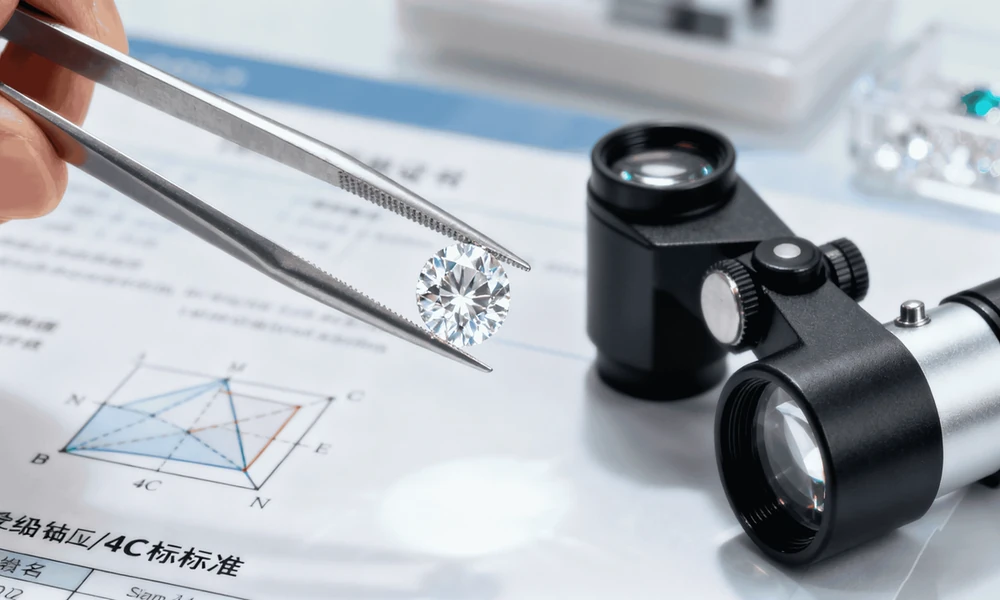

Purchasing a natural diamond is a significant decision that deserves confidence and an informed choice. As every diamond is unique, understanding its physical attributes empowers you to choose a gem that resonates with your journey.
The 4Cs of diamonds offer a simple way to compare different types of diamonds with confidence. This guide explains each of the 4Cs and highlights a few other factors worth considering before making your purchase.
4Cs of Diamonds Explained
|
Criteria |
What It Means |
Common Types or Grades |
How It Affects the Diamond |
How to Choose |
|
Cut |
Evaluates how well a diamond’s proportions, facet arrangement and symmetry interact with light. It is different from the diamond’s shape, such as round or oval. |
Excellent, Very Good, Good, Fair, Poor |
A well-cut diamond maximises brilliance (white light), fire (coloured flashes) and scintillation (sparkle), creating a bright and lively appearance. Even a diamond with great colour and clarity can have less brilliance if the cut is not well executed. |
Choose the highest cut grade possible within your budget. A well-cut diamond creates the strongest visual impact and enhances its overall appearance. |
|
Colour |
Measures how much natural colour is present in a diamond. Less colour generally results in a brighter appearance. |
D-F (Colourless), G-J (Near Colourless), K-M (Faint Colour), N-R (Very Light Colour), S-Z (Light Colour) |
Colour affects the overall beauty of a diamond, particularly in larger stones. Many near-colourless diamonds offer a bright look while balancing quality and budget. |
Select a colour grade that balances appearance and value. The right choice also depends on the metal in which the diamond will be set. |
|
Clarity |
Refers to the natural marks or inclusions formed during a diamond’s creation. Most are difficult to notice without magnification. |
Flawless (FL), Internally Flawless (IF), Very Very Slightly Included (VVS), Very Slightly Included (VS), Slightly Included (SI), Included (I) |
Higher clarity grades have fewer visible marks. However, diamonds with medium clarity appear clean when viewed without specialised tools. |
Select a clarity grade that results in inclusions invisible to the naked eye, offering a balance between quality and value. |
|
Carat Weight |
Measures a diamond’s weight rather than its physical size. Different diamond shapes can appear larger or smaller despite having the same carat weight. |
Expressed in metric carats, where one carat equals 0.2 grams |
Higher carat weights create a bold visual presence. However, a diamond’s cut and proportions also influence its apparent size. |
Select a carat weight that suits your budget while offering a balanced look. |
The 4Cs should always be considered together, not individually. A balanced combination often creates a diamond that looks beautiful while matching your fashion sense.
Factors Beyond the 4Cs for Buying a Diamond
Unique Aesthetic
Every diamond has its own character, making personal preference an important aspect of the selection process. Consider the shape and overall sparkle that reflects your personality.
Secure Setting
A well-crafted setting protects the natural diamond while enhancing its beauty. If you lead an active lifestyle, settings such as bezel or low-set prongs offer excellent protection.
Metal Choice
The metal frame significantly influences how a diamond reflects light. White metals enhance the brilliance of colourless diamonds, while yellow and rose gold create a warm contrast.
Summing Up
Understanding the 4Cs helps you make an informed decision when choosing a natural diamond. By balancing these qualities with your personal preferences, you can select a diamond that represents your unique story and remains meaningful for years to come.