
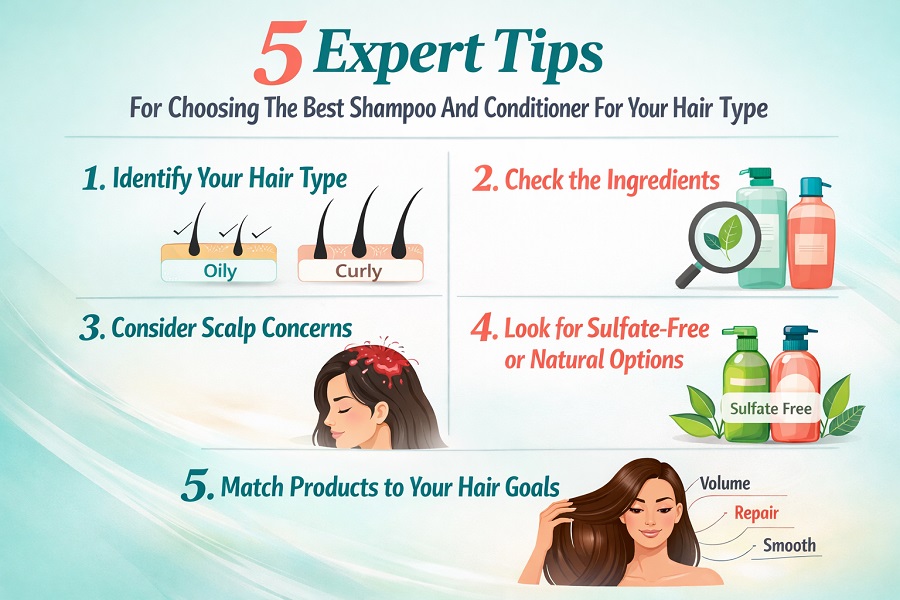

Spent good money on a shampoo that did absolutely nothing? There’s a whole graveyard of half-used bottles under most bathroom sinks proving the same point – buying something well-reviewed and buying something right for your hair are completely different decisions. One is easy. The other requires actually knowing what your hair needs, which turns out to be the step most people skip entirely.
1. Figure Out What Your Hair Actually Is Right Now
Not what it used to be. What it is today, in the condition it’s currently in.
Hair that’s been blown out daily for two years doesn’t behave like its natural type anymore. It behaves like damaged hair. Color-treated hair has different porosity than virgin hair. Choosing a shampoo and conditioner based on some idealized version of your hair type – when your actual hair is sitting there in a very different condition – is why products keep underperforming. Fine hair needs light formulas. Thick hair needs penetration. Curly hair trends toward dryness regardless of thickness. Start with the real picture, not the idealized one.
2. The Back of the Bottle Is the Whole Game
The front is a sales pitch. “Nourishing,” “repairing,” “salon-quality” – none of that means anything specific. The ingredient list does.
Sulfates strip – sodium lauryl sulfate especially. It pulls color out and over-cleanses scalps that don’t need that level of intervention. Silicones look good short term but build up and block moisture from getting in. The best shampoo and conditioner formulas do less dramatically and more consistently. Ceramides for structure. Glycerin for moisture retention. Panthenol for elasticity. Not exciting – effective. There’s a difference.
3. Match the Product to the Problem, Not the Trend
Scalp problems and hair problems need different solutions. A dry flaky scalp needs a balancing formula – not a rich moisturizing mask applied root to tip. Ends that are splitting need moisture and protein further down the shaft. These are not the same product.
Buying whatever ingredient is trending this season – or grabbing what a friend swore by – is how people end up with routines that include decent products and still produce frustrating results. A shampoo and conditioner matched to the actual problem is worth ten times more than an expensive formula solving for the wrong thing.
4. Give It Actual Time
Six weeks minimum before writing something off. Most people give it two, notice no dramatic transformation, and move on.
Hair doesn’t respond on a two-week timeline. Especially damaged hair – it needs sustained consistent input before anything visibly shifts. Rotating through three different options in six weeks means nothing got a real chance. Pick something that makes sense for your hair. Use it. Then evaluate it properly.
5. How Often You Wash Changes Everything
Daily washing and twice-weekly washing are completely different experiences for the scalp – and the same formula doesn’t serve both schedules equally.
Washing every day means stripping the scalp seven times a week. Daily washers need the mildest formula available. Twice-weekly washers can handle something slightly more clarifying every few washes without disrupting balance. The best shampoo and conditioner for your hair type also has to make sense for your actual washing frequency. Not accounting for that variable is why identical routines produce wildly different results for different people.
Conclusion
Stop looking for the universally best option and start looking for the right one for you. Hair type, current condition, washing frequency, actual problems – that narrows the field fast. The right shampoo and conditioner exists but it starts with honest answers about what your hair actually needs, not what the packaging promises it can fix.


