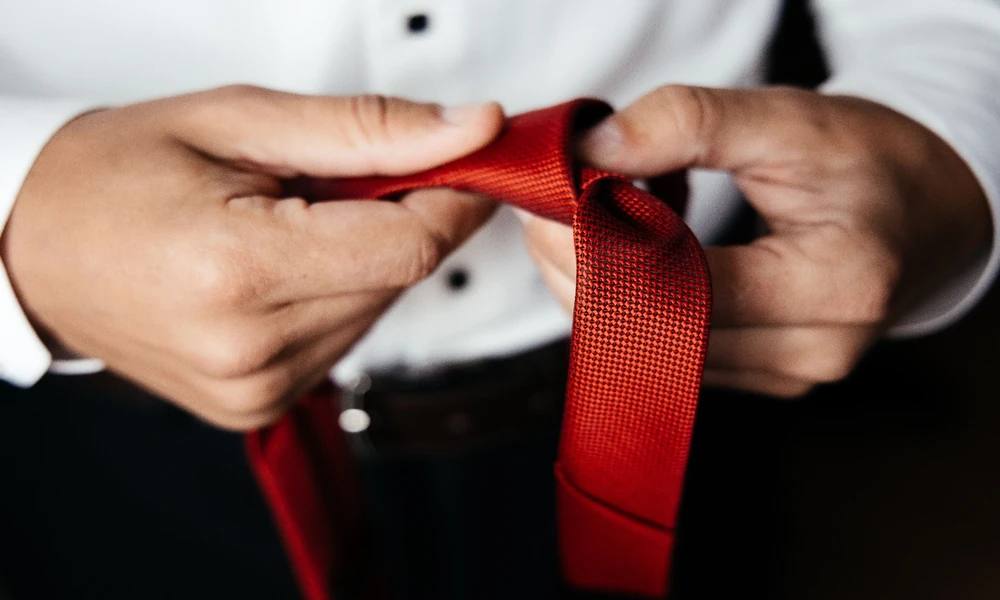

Ties have not disappeared from wardrobes; they have just become more selective. Most men now wear it only for specific occasions rather than every workday. This means the time comes out of your wardrobe for a very few occasions, but it should truly look good when it does. If you want this right, it is essential to check a few things before buying so that you pick the best pieces for yourself.
Choosing the Right Tie for the Occasion
Fabric is the first thing that determines how formal a tie reads. Some of the most common types of fabric options you get are:
- Silk ties are the standard for formal settings, weddings, business presentations, client meetings. Knitted ties are a little less formal and work better with smart casual outfits.
- Wool ties are better suited to winter dressing and pair well with tweed or heavier fabrics.
Width matters in proportion to the lapel area of the jacket being worn. Always see to it that you consider these before picking a tie:
- A wide tie with narrow lapels looks mismatched. With a slim tie with wide lapels you may face the same problem.
- Keep the sizes of the lapel and the tie width roughly the same at their widest points for the outfit to look considered.
Exploring ties by fabric and occasion before buying makes it easier to build a small set that covers most situations rather than accumulating ones that only work with specific outfits.
| Tie Fabric | Best Occasion | Works With |
| Silk | Formal, business | Suits, dress shirts |
| Knitted | Smart casual | Blazers, chinos |
| Wool | Winter, casual formal | Tweed, heavier fabrics |
Adding the Right Accessories
A tie bar is one of the more functional accessories in men’s dressing. It keeps the tie in place through a long day and stops it from swinging forward when leaning over a desk or table. It should clip between the third and fourth buttons of the shirt and sit horizontally.
Silver cufflinks tiepins in a matching metal finish pull a formal outfit together without requiring much effort. Silver works well with cooler tones, grey suits, navy jackets, white and blue shirts.
To Wrap Up
Styling a tie well does not require a large collection or complicated rules. A few ties in different fabrics, the right knot for the occasion, and accessories that match in finish cover most situations. AJIO has over 2,000 ties, cufflinks, and tiepins for men. You can choose the most practical and useful one for yourself according to your budget.
FAQs
- What is the easiest tie knot for beginners?
The four-in-hand is the most simple to learn and works with most shirt collar types. It produces a slightly asymmetrical knot, which actually suits most casual and semi-formal occasions better than a perfectly symmetrical one.
- How do I know what tie width to buy?
Match it to your jacket’s lapel width. If your suits have standard lapels, a tie between 7 and 9 centimetres wide works across most outfits. Slim ties below 6 centimetres are better kept for slim-cut suits with narrow lapels.
- Can ties be worn without a jacket?
Yes, particularly knitted and wool ties which sit more casually than silk. A tie with a well-fitted shirt and trousers works for smart casual settings where a full suit would be overdressed.
- How should a tie bar be worn?
It clips horizontally across the tie and shirt placket, sitting between the third and fourth shirt buttons. The bar should be slightly narrower than the tie itself, a bar that extends beyond the tie edges looks disproportionate.
- How do I store ties without damaging them?
Rolling them loosely and storing upright in a drawer is better for the fabric than leaving them knotted or hanging indefinitely. Hanging works for short periods but causes silk ties to stretch slightly over time if left for weeks.